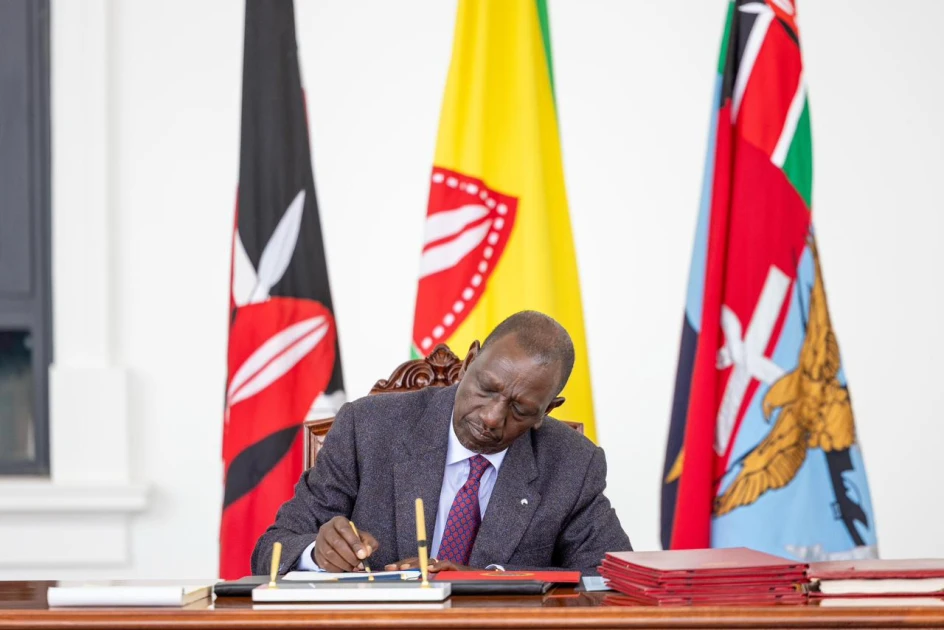
President William Ruto has signed into law a new measure reducing Value Added Tax (VAT) on fuel from 16 percent to 8 percent, in a move aimed at easing the burden on Kenyans following a sharp rise in fuel prices.
The decision comes after widespread public anger and pressure from stakeholders across the transport, business, and manufacturing sectors, who warned that soaring fuel costs were pushing the cost of living to unsustainable levels.
In recent weeks, pump prices for both petrol and diesel had surged past KSh 206 per litre, triggering concerns over rising transport fares, increased food prices, and overall economic strain on households.
READ ALSO : Transport Costs Set to Rise by 14% as Fuel Prices Hit Record High in Kenya
The VAT reduction is expected to bring immediate relief at the pump, with industry players anticipating a noticeable drop in fuel prices once the changes take effect. Analysts say the move could also help stabilize transport costs, which had been projected to rise by up to 14 percent.
However, economists caution that while the tax cut offers short-term relief, underlying challenges in the global oil market and local sup

ply chain inefficiencies could continue to influence fuel pricing in the long run.
The move also raises questions about government revenue, as the reduction in VAT is likely to impact tax collections at a time when the country is already facing fiscal pressure.
Even so, the policy shift signals the government’s response to public concern and its attempt to cushion citizens from escalating living costs.
As Kenyans await the implementation, attention now shifts to how quickly the benefits will be felt and whether further interventions will follow to ensure long-term stability in fuel prices.