

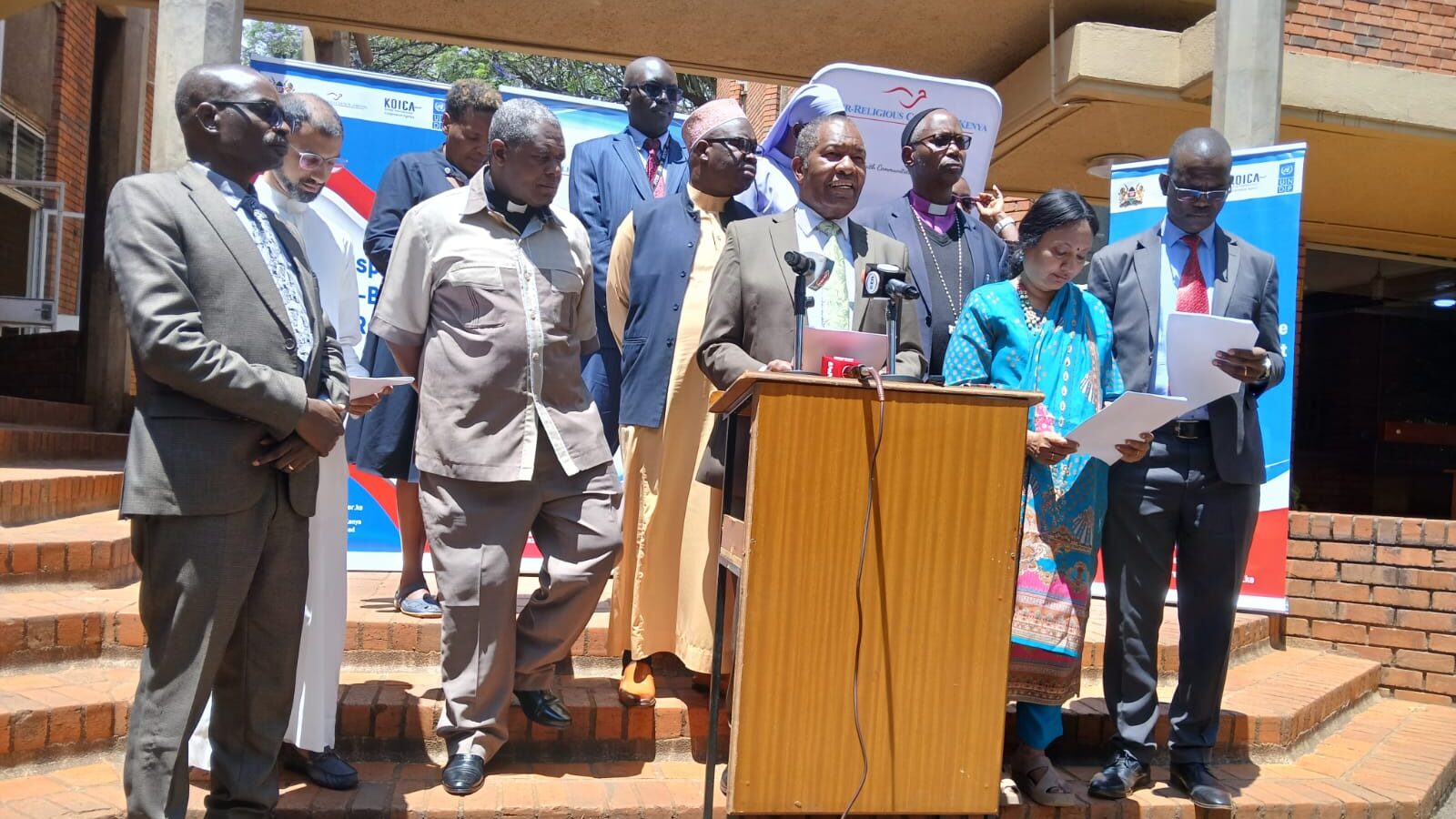
Religious leaders under the Interreligious Council of Kenya (IRCK) have called on political leaders, security agencies, electoral institutions, the media and members of the public to uphold peace, tolerance and accountability ahead of the August 10, 2027, General Election.
The religious leaders warned that Kenya risks experiencing electoral violence if political leaders continue to promote ethnic divisions, hate speech, misinformation and political intimidation.
Speaking during a meeting at Ufungamano House in Nairobi, the leaders emphasized the need for a peaceful electoral process, urging Kenyans to embrace dialogue, respect diversity and resolve political differences through democratic means.
They noted that the country is approaching the 2027 elections amid economic challenges, unemployment, rising public debt and declining public confidence in electoral institutions.
The leaders said the election should be a contest of ideas and policies rather than a battle between communities, warning against attempts to mobilize Kenyans along ethnic, religious or political lines.
Quoting the Bible in Matthew 5:9, they reminded Kenyans that, “Blessed are the peacemakers, for they shall be called the sons of God.”
They also cited teachings from the Hindu and Islamic faiths that emphasize truthful, beneficial and just speech, noting that religious teachings across communities encourage peace, responsibility and respect for others.
Religious Leaders Warn Against Electoral Violence
The IRCK leaders expressed concern over the possibility of localized electoral violence, citing warnings from the Conflict and Condition Electoral Vulnerability Index regarding potential violence if existing tensions are not addressed.
They observed that electoral violence rarely occurs spontaneously, arguing that it is often planned and incited through inflammatory language, political mobilization and deliberate efforts to create divisions among communities.
The leaders called on political actors to take responsibility for preventing violence, noting that politicians bear a significant responsibility for the challenges associated with the electoral cycle.
They urged Kenyans to remain calm, tolerant and united, emphasizing that a neighbor of a different tribe, religion or political affiliation should never be regarded as an enemy.
Citizens were also urged to reject attempts to recruit them into violent activities, including disrupting political meetings, intimidating opponents or destroying property in exchange for money.
Youth Urged to Reject Political Violence
The religious leaders made a passionate appeal to young people, reminding them of their role in shaping Kenya’s political future through peaceful civic participation.
They urged the youth not to allow themselves to be recruited or paid to cause chaos, disrupt political gatherings or engage in acts of violence.
The leaders emphasized that young people’s future is too valuable to be sacrificed for short-term financial gains.
Instead, they encouraged young people to register as voters, participate peacefully in the electoral process and hold political leaders accountable through the ballot.
They noted that young people have previously demonstrated their ability to influence the national agenda through peaceful civic action and can continue doing so without resorting to violence.
Security Agencies Urged to Remain Neutral
The IRCK called on security agencies to maintain strict neutrality and professionalism throughout the electoral period.
They emphasized that the National Police Service and other security institutions must protect the lives and property of all citizens and candidates equally, regardless of political affiliation.
The religious leaders urged security agencies to manage political campaigns and public events in a manner that respects human rights and democratic freedoms.
They also expressed concern over reports of political gangs and groups allegedly being recruited to intimidate opponents and disrupt political activities.
According to the leaders, information presented during the meeting indicated that approximately 170 gangs across the country were allegedly being hired by politicians for political activities.
They called for firm action against political militias and criminal groups involved in electoral intimidation.
The leaders also condemned recurring cases of femicide, forced disappearances and abductions, warning that such incidents must be addressed as the country approaches the elections.
Political Leaders Warned Against Hate Speech
The religious leaders expressed concern over political mobilization characterized by ethnic profiling, political zoning, insults and veiled threats.
They said inflammatory statements are increasingly being made during political rallies, on social media platforms, at funerals and even in places of worship.
The IRCK called on political leaders, aspirants and their supporters to desist from hate speech, ethnic stereotypes, incitement and derogatory language targeting any community, gender, religion or persons with disabilities.
They emphasized that Kenyans are looking for solutions to the rising cost of living, unemployment and declining public services.
Political leaders were therefore urged to focus on presenting policies and development agendas rather than promoting fear, hatred and division.
The leaders further called on political actors to respect the electoral laws and the electoral calendar, noting that the official campaign period is scheduled to begin on May 29, 2027.
They also urged politicians to commit themselves to refusing to recruit or finance young people for political intimidation.
The religious leaders warned political leaders against creating, sharing or financing fake news and AI-generated deepfakes, emphasizing that leaders must take responsibility for information published or circulated in their names.
Religious Institutions Warned Against Political Campaigning
The IRCK leaders reaffirmed their commitment to maintaining the neutrality of religious institutions throughout the electoral process.
They emphasized that churches, mosques, temples and other places of worship must remain sanctuaries for all Kenyans, regardless of religious or political affiliation.
The leaders warned against using religious platforms to campaign for political candidates, promote division or legitimize partisan political activities.
They said religious institutions should instead serve as spaces for reconciliation, dialogue, peacebuilding and civic education.
Media Freedom and Responsible Journalism
The religious leaders expressed concern over the shrinking civic space and growing threats to media freedom, warning that these developments could undermine Kenya’s democratic gains.
They condemned incidents of harassment and intimidation targeting journalists while carrying out their professional duties.
The IRCK called on the government, security agencies and political factions to protect journalists and guarantee their safety as they fulfill their constitutional responsibility of informing the public.
They emphasized that a free and unhindered press is essential to a transparent and credible electoral process.
However, the leaders reminded media houses and journalists that freedom of expression comes with a responsibility to the Kenyan public.
They called for balanced reporting, professional integrity and responsible journalism that prioritizes national cohesion over sensationalism.
Journalists were urged to avoid becoming instruments of hate speech, misinformation or divisive propaganda.
The religious leaders emphasized that the media must remain impartial and provide voters with accurate and objective information to enable them to make informed decisions.
They further urged journalists to prioritize peace, stability and national unity in their coverage of the electoral process.
IEBC Urged to Strengthen Transparency and Public Confidence
The IRCK called on the Independent Electoral and Boundaries Commission (IEBC) to enhance transparency, accessibility and accountability in its preparations for the 2027 General Election.
The leaders observed that public trust in electoral institutions is built long before election day and can easily be lost if institutions fail to communicate effectively or address public concerns.
They acknowledged the commission’s progress, including continuous voter registration, which they said began on September 25, and the expansion of diaspora voter registration to 26 counties.
However, they expressed concern over funding gaps, transparency in voter registration, delayed electoral reforms, stalled procurement of election technology and questions surrounding the integrity of results transmission.
The religious leaders urged IEBC to conduct regular public briefings on its state of preparedness and ensure that electoral procurement processes are conducted openly and on time.
They also called on the commission to engage religious leaders, young people, media practitioners and civil society organizations at national and county levels.
The leaders emphasized that transparent communication and public participation are essential in strengthening confidence in the electoral process.
Political Parties and Parliament Urged to Ensure Fair Nominations
The IRCK called on the Office of the Registrar of Political Parties to ensure that political party nomination rules and processes are fair, transparent and free from manipulation.
They noted that party nominations are often among the first flashpoints for electoral violence and political disputes.
The religious leaders urged Parliament to fast-track pending amendments to electoral laws and campaign finance regulations to ensure that the rules governing the election are clearly established well before the campaign period.
They also called on the National Treasury to release the necessary funding to IEBC in good time, warning that budget shortfalls could compromise the credibility of the elections.
The judiciary, the Office of the Director of Public Prosecutions and the National Police Service were also urged to communicate clearly about their preparations for handling electoral offences and disputes.
The leaders emphasized that electoral disputes must be resolved promptly, fairly and impartially in accordance with the law.
NCIC Commended for Action Against Hate Speech
The religious leaders commended the National Cohesion and Integration Commission (NCIC) for its recent actions against hate speech and ethnic discrimination.
They noted that the commission had opened investigations and summoned leaders suspected of violating the National Cohesion and Integration Act, including senior political figures from across the political divide.
The IRCK said such actions send a clear message that no individual is above the law and that hate speech cannot be justified as freedom of expression.
However, they emphasized that the law must be applied equally to all individuals regardless of political affiliation, public office or community.
The leaders called for due process and respect for the presumption of innocence throughout investigations and prosecutions.
They urged the National Police Service to support the commission in enforcing the law where sufficient evidence exists.
The Office of the Director of Public Prosecutions and the courts were also urged to conclude hate speech cases expeditiously, warning that prolonged investigations and unresolved cases could undermine public confidence.
The religious leaders further called for adequate resources for NCIC and other constitutional commissions to enable them to effectively carry out their mandates.
They emphasized the need to strengthen county-level monitoring of hate speech, particularly on digital platforms and in local languages.
The leaders also proposed stronger coordination between the commission, security agencies, religious leaders and local peace committees to improve early warning and response mechanisms.
Religious Leaders Commit to Peacebuilding and Civic Education
The IRCK reaffirmed its commitment to using religious institutions across the country to promote peace, tolerance and civic responsibility.
The leaders said churches, mosques, temples and other religious platforms would be used to preach peace, promote unity and conduct civic and voter education.
They announced plans to develop a simplified guide for religious leaders to support peaceful electoral engagement.
The council also committed to supporting local peace committees and working with other stakeholders to transform potential electoral conflict hotspots into areas of peaceful engagement.
The religious leaders said they would collaborate with like-minded organizations to develop positive narratives and counter misinformation and disinformation.
As part of its electoral preparedness, the IRCK said it would mobilize and equip a National Peace and Religious Team comprising respected religious and non-religious mediators.
The team is expected to help defuse tensions before they escalate and resolve disputes arising from political party nominations, campaigns and other electoral activities.
The mediators will remain on standby at national and county levels and work closely with NCIC, the National Steering Committee on Peace Building and Conflict Management, the UN Platform for Peace, local peace committees and security agencies.
The council said the initiative would strengthen shared early-warning systems and rapid-response mechanisms throughout the electoral cycle.
Kenya Urged to Protect Peace and National Unity
In conclusion, the religious leaders emphasized that Kenya belongs to all its citizens and that protecting the country’s democratic future is a collective responsibility.
They called on political leaders, citizens and institutions to ensure that the 2027 General Election is conducted peacefully, with political competition based on ideas and policies rather than hatred and division.
The IRCK urged Kenyans to respect the will of the people as expressed through a free, fair, credible and peaceful electoral process.
The leaders also discouraged politicized donations and reiterated their opposition to the use of religious platforms for partisan political activities.
They pledged to continue praying for Kenya, its leaders, electoral institutions and all citizens as the country prepares for the 2027 General Election.
